Draw Weight and Tiller
Properly setting up your draw weight and tiller is essential for achieving consistency, control, and precision in archery. These two parameters directly affect how the bow behaves during the shot and how well it suits your shooting style.
Let’s take a closer look at what they are and how to adjust them.
What Is Draw Weight?
Draw weight refers to the force required to draw the bowstring back to a specific length — typically the archer’s full draw or the point where the clicker goes off. It's measured in pounds (lbs), and it increases as the draw length increases.
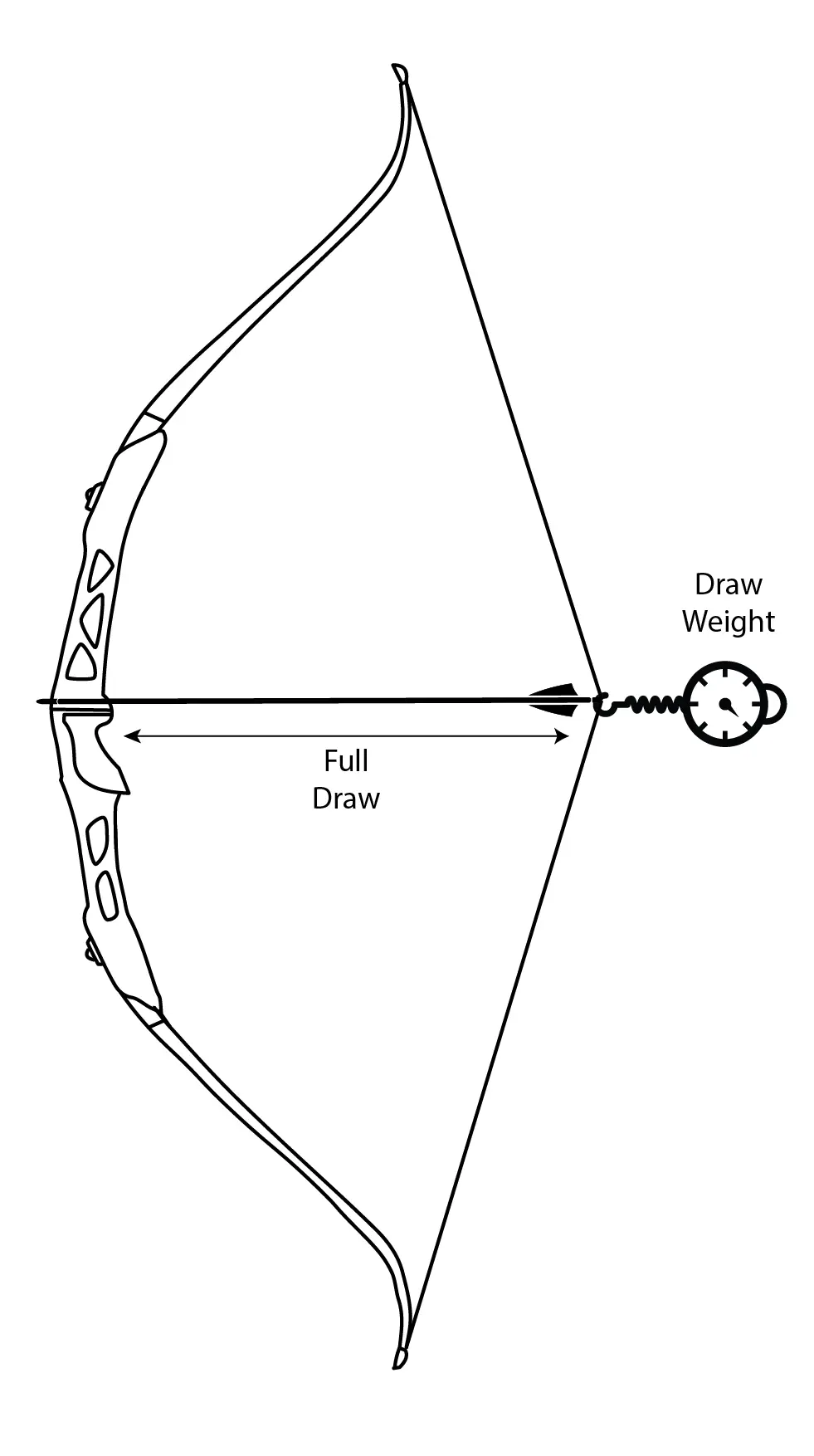
Draw weight is determined by the limbs and is typically marked based on a 25” riser. Additional draw weights for 23” and 27” risers may also be indicated.
Draw weight is the foundation for tuning the rest of the bow: arrow spine, stabilizer setup, and even button tension depend on it.
Heavier draw weights provide better arrow stability and become especially important at longer distances.
What Is Tiller?
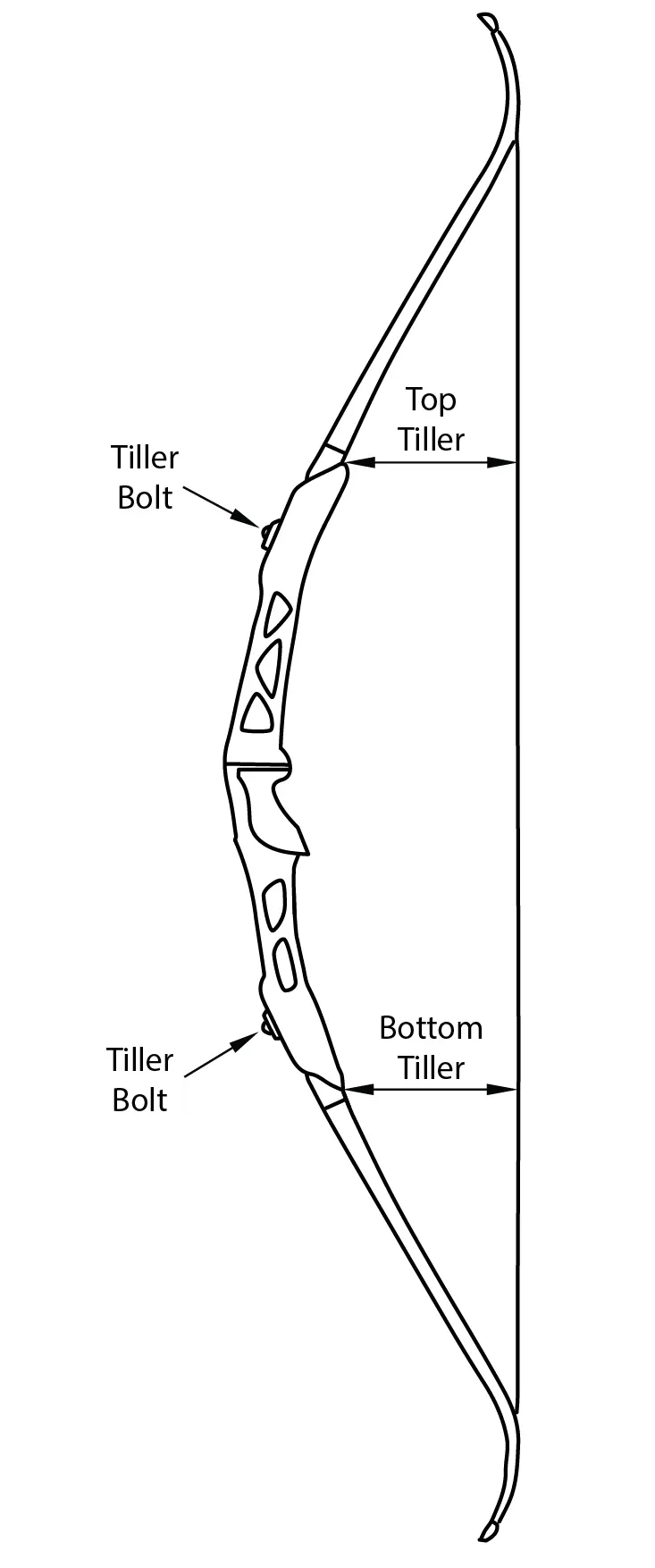
Tiller is the difference in distance between the string and the limbs at the top and bottom limb pockets.
There are three main types of tiller:
- Positive tiller: the top limb-to-string distance is greater
- Negative tiller: the bottom limb distance is greater
- Neutral tiller: both distances are equal
Why is this important?
In Olympic recurve, the archer grabs the string slightly above center, which puts more load on the top limb. To balance this out, the top limb is slightly weakened — creating a positive tiller of around 2–6 mm.
In barebow, the grip on the string is often below center, which increases the load on the bottom limb. To compensate, we strengthen the top limb and use a negative tiller — typically 4–8 mm.
How to Adjust Tiller
Tiller is adjusted using the tiller bolts located at the top and bottom of the riser. These bolts control how tightly the limb is pressed into the riser pocket:
- Tightening the bolt moves the limb closer to the riser and decreases the limb-to-string distance
- Loosening the bolt moves the limb farther out and increases the distance
How to adjust:
- Remove the string from the bow (critical!).
- Loosen the locking screw (usually on the side or back of the riser).
- Adjust the tiller bolt in or out to achieve the desired distance.
- Re-tighten the locking screw when finished.
Note: While mechanisms vary slightly between manufacturers, the principle is always the same.
Adjusting Draw Weight
Since the tiller bolts also control how far the limbs are seated, they directly affect draw weight.
A common practice for new setups is to:
- Install the limbs
- Start with the tiller bolts backed out as far as safely possible (i.e., minimum draw weight)
- Gradually increase draw weight by tightening the bolts over time, as the archer gains strength and improves technique
Important Safety Notes
- Always adjust tiller bolts with the string removed — never under load!
- Never unscrew tiller bolts more than 5 full turns from the riser. Doing so weakens the thread engagement and may result in thread stripping or mechanical failure during shooting
Summary
Draw weight and tiller tuning are essential steps in personalizing your bow to match your form, goals, and shooting discipline. A properly tuned bow:
- shoots smoother
- behaves more predictably
- and lets you focus on technique, not on fighting the equipment
Take your time with this process — your accuracy and shooting confidence will thank you.